Sustainability / Logistics / Building Envelope
Schüco、物流の電動化を開始
海外建材にも、製品性能だけでなく、原材料・製造・物流・保守・再利用まで含む環境説明が求められる時代へ。
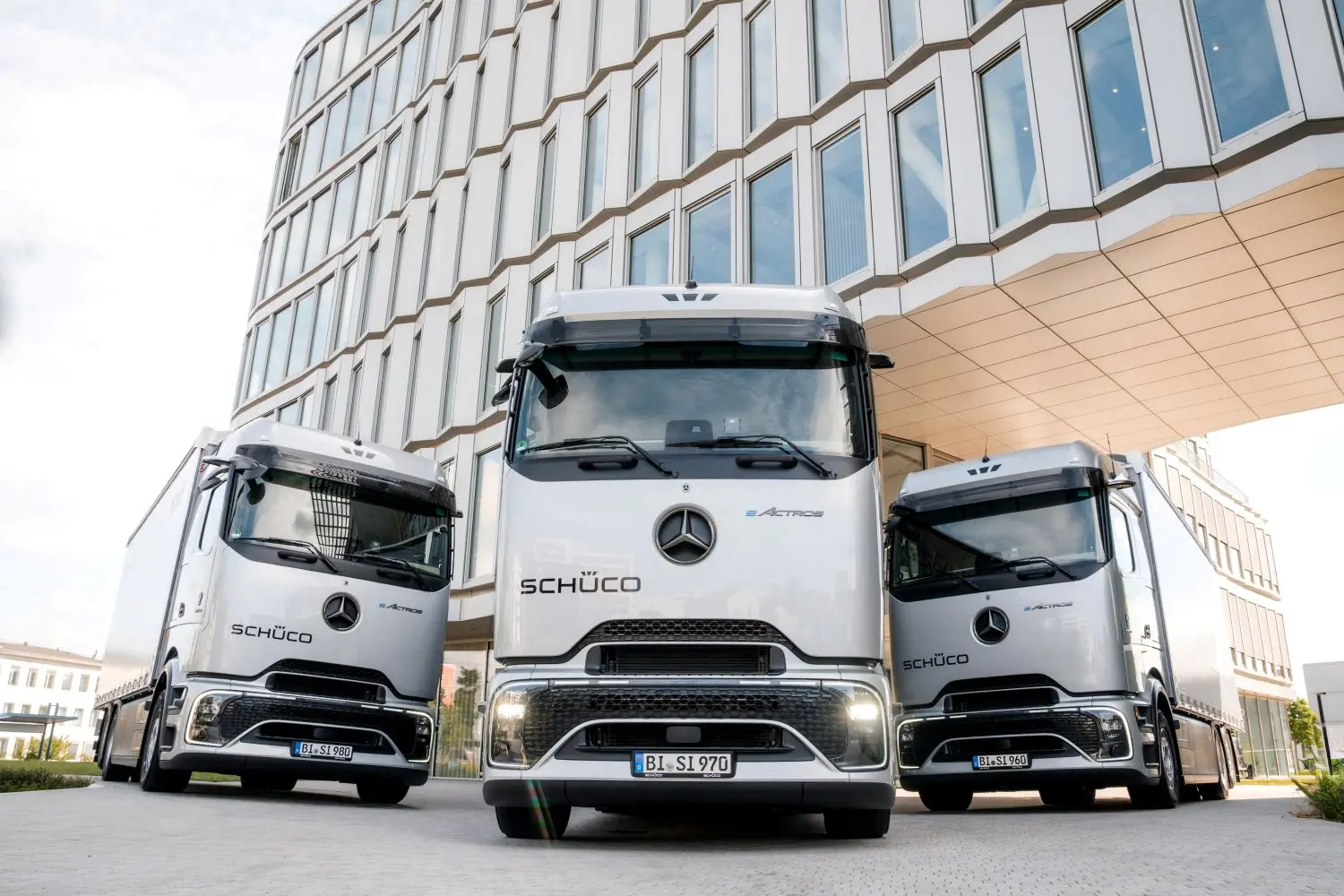
Schücoは2026年7月、ドイツ国内の物流に大型電動トラックを導入しました。
この動きは、窓・ドア・ファサードの性能だけでなく、原材料、製造、輸送、使用、保守、再利用まで、
建物外皮のライフサイクル全体を持続可能にするというSchücoの姿勢を示すものです。
物流の電動化は、単なる車両更新ではない
建築材料の環境性能は、完成した製品の断熱性能だけでは測れません。
原材料をどこから調達し、どのように製造し、どの距離を輸送し、
建物に設置された後にどの程度長く使え、最終的に分解・再利用できるか。
こうした一連のプロセスが、建築の脱炭素化を考えるうえで重要になっています。
Schücoによる物流車両の電動化は、サプライチェーンにおけるCO₂排出量を低減し、
自社の環境戦略を製品の外側にまで広げる取り組みです。
これは、建築業界が「高性能な製品を選ぶ」段階から、
「ライフサイクル全体を説明できる製品と企業を選ぶ」段階へ移行していることを象徴しています。
Schücoは「窓メーカー」を超えた建物外皮のシステム企業
Schücoは、アルミ、スチール、PVC-Uによる窓、ドア、スライディングシステム、
ファサードなど、建物外皮のシステムソリューションを世界各国に提供しています。
さらに、企画・設計支援、デジタルデータ、加工機械、製作、施工、保守まで、
建築プロジェクトの各段階を支える仕組みを整えています。
したがってSchücoを評価する際には、「ドイツ製で断熱性能が高い」という説明だけでは不十分です。
性能、意匠、耐久性、デジタル設計、製作精度、サービス、
そしてサステナビリティを一体として捉える必要があります。
日本の設計・不動産市場で求められる環境情報
今後、設計事務所、デベロッパー、ゼネコン、建物オーナーが海外建材を採用する際、
次のような情報を求める場面が増えると考えられます。
- アルミ形材に含まれる再生材の割合と調達経路
- EPD(環境製品宣言)など、第三者検証を伴う環境情報
- 原材料調達、製造、輸送に伴うCO₂排出量
- 製品寿命、耐久性、維持保全計画
- ガラス、金物、ガスケットなど消耗部品の交換可能性
- 解体時の分別、回収、再利用、リサイクルの考え方
- 国内加工・国内組立による輸送合理化とトレーサビリティ
日本国内で加工・組立する意味
相川スリーエフは、Schücoシステムを日本国内で加工・組立するファブリケーターとして、
製品供給だけではなく、設計、製作、品質管理、納期、保守まで含めた体制を構築しています。
ドイツから完成品を輸入する方法と比較した場合、国内製作には次の価値があります。
1. 輸送の合理化
完成品ではなく必要な部材を適切に輸送し、国内で加工することで、案件条件に応じた物流計画を組み立てやすくなります。
2. 製作の見える化
加工、組立、検査、出荷の履歴を国内で管理し、品質とトレーサビリティを明確にできます。
3. 長期保守への対応
ガラス、金物、ガスケットなどの交換や調整に、国内の技術者と製作設備を活用できます。
4. 日本の建築条件への対応
設計条件、施工方法、気候、法規、現場工程を踏まえ、日本国内のプロジェクトに適した納まりを検討できます。
「高断熱」から「ライフサイクル価値」へ
建築分野では、断熱性能、気密性能、水密性能、耐風圧性能、遮音性能などの数値評価が不可欠です。
一方で、今後はそれらに加えて、LCA、EPD、エンボディドカーボン、
サーキュラーエコノミー、長寿命化といった評価軸が、より重要になります。
建物外皮は、建築物のエネルギー消費、室内環境、外観、耐久性、資産価値に長期間影響します。
だからこそ、導入時の価格や性能だけでなく、建物の使用期間全体を見据えた選択が必要です。
相川スリーエフが目指す情報発信
私たちは、Schüco製品を紹介するだけのウェブサイトではなく、
世界で進む建物外皮技術、脱炭素、資源循環、デジタル設計、
製作・施工・保守の動向を、日本の建築実務に結び付けて伝える専門メディアを目指します。
設計事務所、デベロッパー、ゼネコン、ファブリケーター、建物オーナー、
そして住まい手にとって、Schücoを正しく理解し、プロジェクトに活用するための情報基盤となること。
それが、国内認定ファブリケーターとして果たすべき役割の一つだと考えています。
Schücoの設計・製作・採用に関するご相談
大開口サッシ、ドレーキップ、スライディングシステム、折れ戸、ファサードなど、
計画初期から設計・製作・施工条件を検討します。
画像:Schüco提供。Schücoの名称および関連商標は、各権利者に帰属します。
本記事は、相川スリーエフが日本の建築実務への示唆を加えて編集したものです。
In July 2026, Schüco introduced heavy-duty electric trucks into its domestic logistics operations in Germany.
The move demonstrates an approach that extends beyond the performance of windows, doors and façades:
making the entire building-envelope lifecycle more sustainable, from raw materials and manufacturing
to transportation, use, maintenance and future recovery.
Electrifying logistics is more than replacing vehicles
The environmental performance of a construction product cannot be assessed only by its thermal value.
It also depends on where its materials come from, how it is manufactured and transported,
how long it remains serviceable, and whether its components can eventually be separated,
reused or recycled.
By electrifying logistics vehicles, Schüco is extending its sustainability strategy beyond the product
and into the supply chain. The initiative reflects a wider transition in construction:
from selecting a high-performance product to selecting a system and a partner capable of explaining
environmental impact across the full lifecycle.
Schüco is more than a window manufacturer
Schüco develops system solutions for aluminium, steel and PVC-U windows, doors,
sliding systems and façades. It also supports multiple phases of a building project
through planning services, digital data, fabrication machinery, production solutions and after-sales service.
Describing Schüco simply as a German brand offering high thermal performance is therefore incomplete.
Performance, design, durability, digital planning, fabrication quality, service and sustainability
need to be understood as an integrated system.
Environmental information increasingly required in Japan
- The proportion and origin of recycled aluminium
- EPDs and other independently verified environmental information
- CO₂ emissions associated with sourcing, production and transportation
- Product life, durability and planned maintenance
- Replaceability of glazing, hardware and gaskets
- Separation, recovery, reuse and recycling at the end of service life
- Logistics efficiency and traceability enabled by local fabrication
Why fabrication in Japan matters
As a Schüco fabricator in Japan, Aikawa 3F is building an integrated structure covering design,
fabrication, quality control, delivery and long-term support.
Compared with importing complete fabricated units, local fabrication offers several important advantages.
1. Optimised logistics
Profiles and components can be transported efficiently and fabricated in Japan according to project requirements.
2. Production transparency
Machining, assembly, inspection and shipment can be documented locally, improving traceability.
3. Long-term support
Local technicians and fabrication equipment can support adjustment and replacement of glazing, hardware and gaskets.
4. Adaptation to Japanese conditions
Design requirements, regulations, climate, installation methods and site programmes can be addressed from an early stage.
From thermal performance to lifecycle value
Thermal insulation, airtightness, watertightness, wind resistance and acoustic performance remain essential.
However, LCA, EPDs, embodied carbon, circularity and service life are becoming equally important.
The building envelope affects operational energy, indoor comfort, appearance, durability and asset value for decades.
Our editorial mission
Aikawa 3F aims to provide more than product introductions.
We will interpret global developments in building-envelope technology, decarbonisation,
circular construction, digital design, fabrication, installation and maintenance
for architects, developers, contractors, fabricators, owners and users in Japan.
Schüco design and fabrication enquiries
We support projects involving large-format openings, tilt-and-turn windows,
sliding systems, folding doors and façades from the early design stage.
Image courtesy of Schüco. Schüco and related trademarks belong to their respective owners.
This article has been edited by Aikawa 3F with additional context for architectural practice in Japan.